
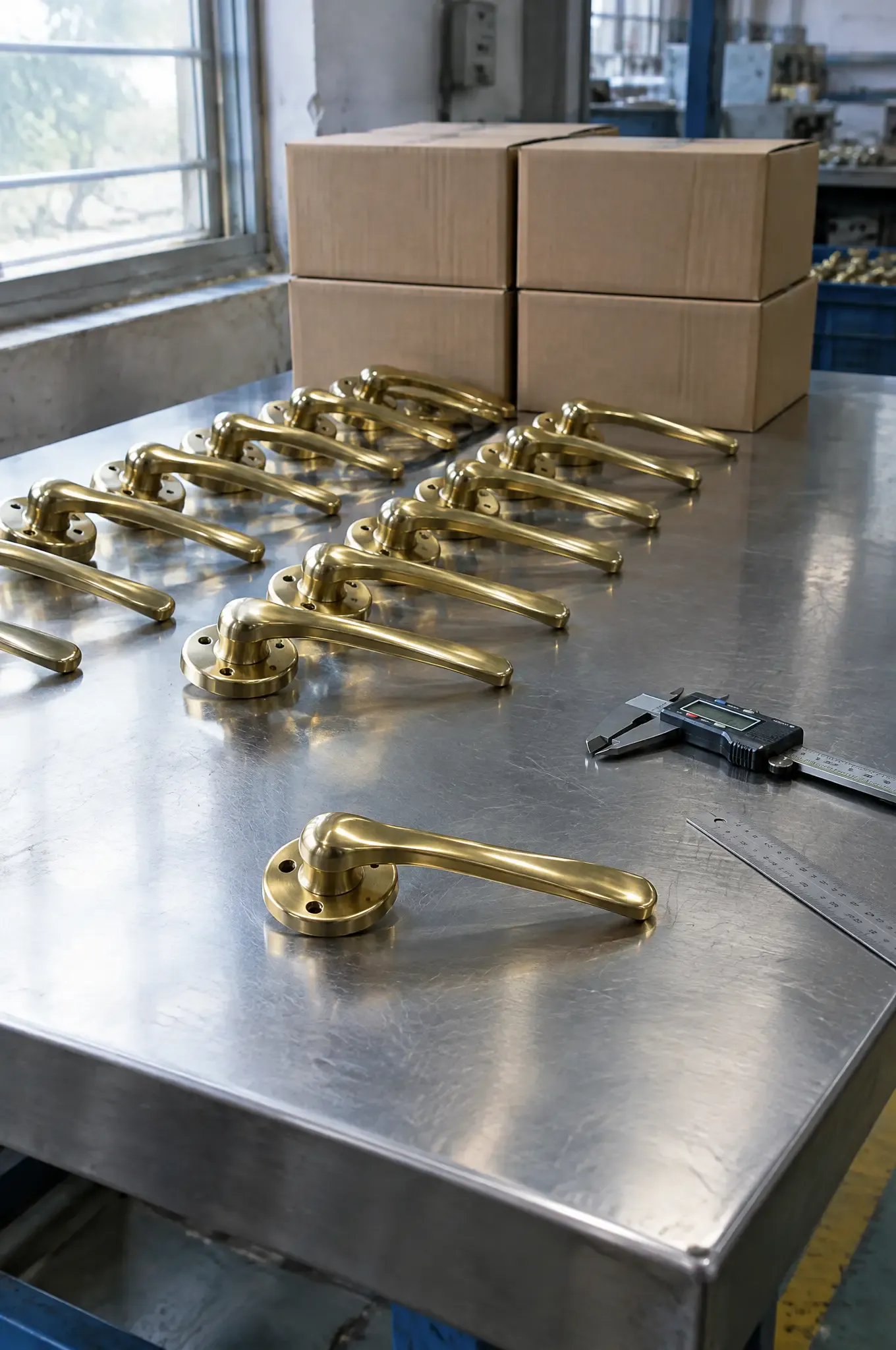
A pre-shipment inspection checks a random sample of your finished order against the approved sample and your specification before you pay the balance. It should cover quantity, appearance, measurements, function, packaging and labelling, and end with a written pass or fail backed by photos.
Paying the balance is your last point of leverage. Once the money is sent and the container has left, fixing a problem means returns, rework at your end or lost sales. A structured inspection is how you make that payment with confidence.
How AQL sampling works
Inspectors don't check every unit. They use AQL (Acceptance Quality Limit) sampling from the ISO 2859-1 standard. Based on your order quantity and the inspection level, the AQL tables give:
- the sample size: how many units to pull at random
- the acceptance number: the maximum defects allowed before the order fails
Defects are usually graded into three types:
| Defect type | Meaning | Typical AQL |
|---|---|---|
| Critical | Unsafe or illegal | 0 (no critical defects accepted) |
| Major | Affects use or would cause a return | 2.5 |
| Minor | Small cosmetic issue, still sellable | 4.0 |
Agree the AQL levels with your factory before production, so nobody argues about the result later.
The pre-shipment inspection checklist
Quantity and packing
- Total quantity matches the order, by style, colour and size
- Carton count, carton marks and shipping labels are correct
- Units per carton match the agreed packing
Appearance and workmanship
- Finish, colour and texture match the approved sample
- No scratches, dents, stains, loose threads or uneven plating
- Logos and printing are in the right position and colour
Measurements
- Key dimensions measured against the specification and tolerances
- Weight checked where it matters for shipping or customs
Function and safety
- Moving parts work: hinges open fully, locks turn, zips run smoothly
- Assembly is complete, with no missing screws or parts
- Any safety or compliance tests your market needs
Packaging and labelling
- Retail packaging undamaged and correctly printed
- Barcodes scan
- Country of origin, care labels and warnings present where required
Carton drop test
A carton dropped from a set height should arrive with the goods undamaged. This shows whether the packing will survive freight.
What a good inspection report includes
A report you can act on has:
- Order details, sample size and AQL levels used
- A clear pass, fail or pending result
- Photos of every defect found, with counts by type
- Measurement tables
- Photos of packed cartons and markings
Video helps too, especially for function tests.
Inspections earlier in production
A final inspection catches problems, but by then the whole order is made. Two earlier checks reduce the risk of a failed order:
- Material check: raw materials and components checked before production starts
- In-line inspection: checks during production, so defects are fixed before they multiply
At The Venture Eight we run six stages of quality control on every order, from pre-production to loading supervision on the day the container is sealed.
Loading supervision
The last risk is the loading itself: the wrong cartons, short quantities or a damaged container. An inspector at loading checks the container's condition, counts cartons in, and records the seal number.
Put it in the contract
Inspection only protects you if the agreement says so. Before production, agree in writing:
- the AQL levels and inspection points
- that the balance is paid only after a passed inspection
- what happens if goods fail, and who pays for re-inspection
If you'd like an inspection plan for your next order, send us your product details.
Questions
What is AQL in quality inspection?
AQL stands for Acceptance Quality Limit. It is a sampling method, defined in ISO 2859-1, that tells an inspector how many units to check from an order and how many defects are acceptable before the order fails.
When should a pre-shipment inspection happen?
When at least 80% of the order is finished and packed, so the inspector sees real production in its final packaging. Earlier in-line inspections catch problems while they can still be fixed.
Who pays for the inspection?
Usually the buyer, because the inspector works for the buyer. If an order fails and has to be re-inspected, many buyers agree in advance that the factory pays for the second inspection.
What happens if an order fails inspection?
The factory reworks or replaces the defective goods and the order is inspected again. This should be agreed in writing before production, along with who pays for re-inspection.