
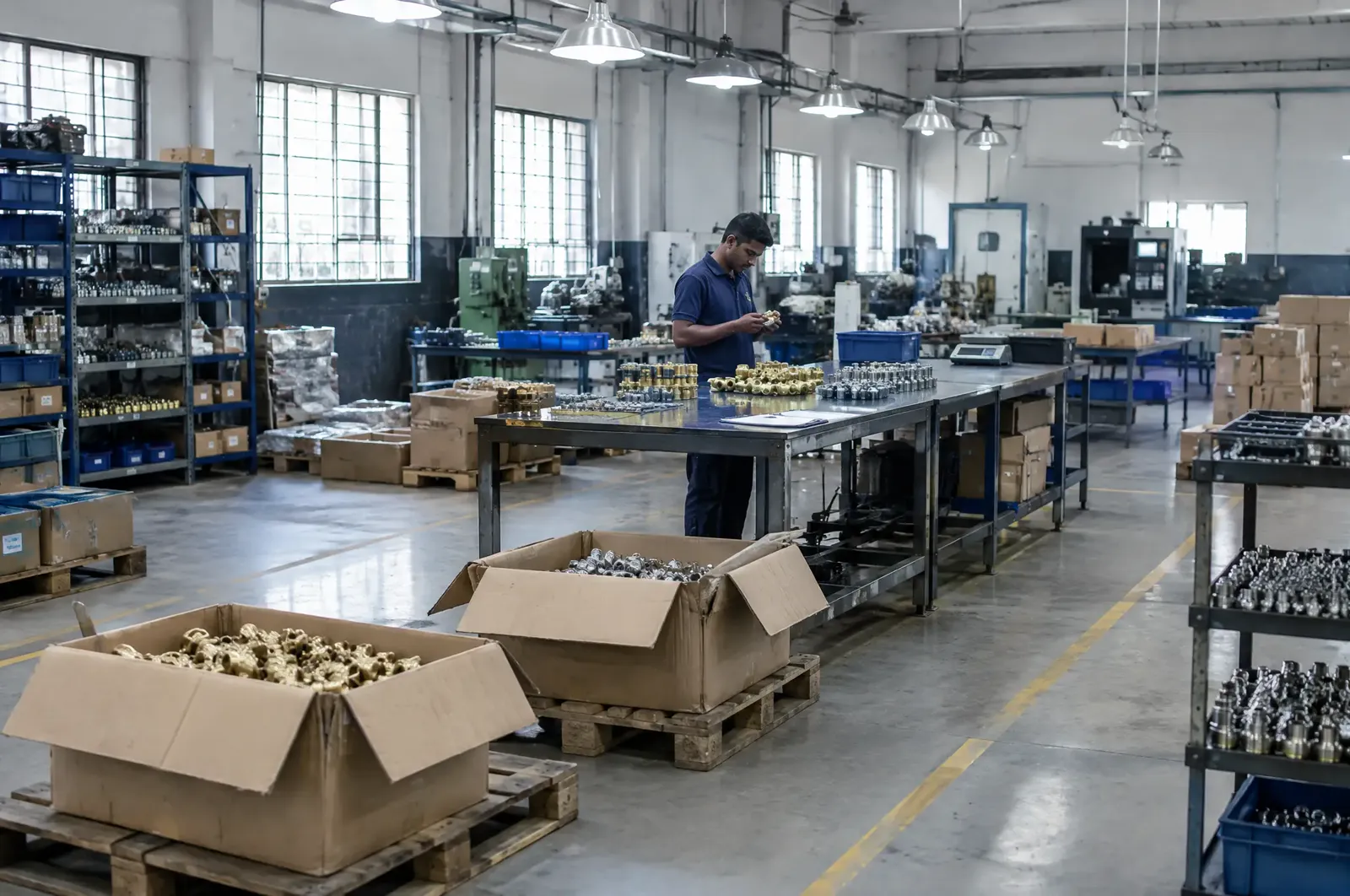
Sourcing products from India works best as a seven-step process: write a clear brief, shortlist and vet factories, approve samples, negotiate terms, follow production, inspect before shipping, then handle export documents and freight. Most problems importers face come from skipping a step, usually vetting or inspection.
India manufactures a wide range of goods for export, from builders hardware and home décor to textiles, leather and handicrafts. The opportunity is real, but buying from a distance means you can't see the factory, the materials or the finished goods yourself. The process below is how we run every order at The Venture Eight's Sourcing Desk.
1. Write a brief a factory can quote from
A good brief gets you accurate quotes and saves weeks of back-and-forth. Include:
- Product specification: dimensions, materials, finish, colour codes and tolerances
- Reference: photos, drawings or a physical sample
- Quantity: your first order and the expected annual volume
- Target price: what you need to pay to sell profitably
- Packaging: inner and outer packing, labels, barcodes and any retail packaging
- Destination: the port or city you're shipping to
- Compliance: any certifications or testing your market requires
Factories prioritise buyers who send complete briefs, because they can tell the order is real.
2. Shortlist and vet factories
Online directories are a starting point, not a shortlist. A factory's listing tells you what it claims; a visit tells you what it can do. When we vet a factory we check:
- Capacity: machinery, workforce and current order book
- Experience: products they already make and markets they export to
- Quality systems: how they check materials, in-line production and finished goods
- Working conditions: safety, cleanliness and how workers are treated
- Documents: company registration, GST and export registration (IEC)
Aim for three to five vetted factories with comparable quotes, so you can choose on quality and reliability as well as price.
3. Develop and approve samples
Never place a bulk order without approving a sample. The approved sample becomes the reference that every later inspection is measured against, so keep one sealed and labelled.
Expect at least one round of changes on custom products. Ask for photos and measurements before samples are couriered, which saves days on each round.
4. Negotiate price and terms
Price is only one part of the deal. Agree these in writing before production starts:
| Term | What to agree |
|---|---|
| Unit price | Per piece, at a stated quantity, in a stated currency |
| Payment | Deposit and balance, with the balance tied to a passed inspection |
| Lead time | Production days from deposit and sample approval |
| Incoterm | Usually FOB for sea freight (see the ICC's Incoterms 2020 rules) |
| Packing | Carton size, units per carton, labels and marks |
| Defects | What happens if inspection fails: rework, replacement or credit |
5. Follow production
Production problems are cheaper to fix while the goods are still on the line. Ask for weekly photo and video updates, and check the first finished units against your approved sample before the rest of the order is made.
6. Inspect before you pay the balance
A pre-shipment inspection checks a random sample of the finished goods against your specification. Most inspections use AQL (Acceptance Quality Limit) sampling, based on the ISO 2859-1 standard, which sets how many units to check and how many defects are acceptable for your order size.
A good inspection report includes photos, measurements, function tests, packaging checks and a clear pass or fail. Only release the balance payment once the order passes. Our guide to QC inspections covers what to check in detail.
7. Export documents and freight
The usual export documents from India are the commercial invoice, packing list, bill of lading (or air waybill) and certificate of origin. Your market may need more, such as test reports or fumigation certificates for wooden packing.
Book freight early in peak seasons, and confirm who is responsible for each cost under your chosen Incoterm.
The mistakes that cost importers most
- Choosing a factory on price alone, without a visit
- Placing a bulk order from a sample the factory made specially, not from its normal production
- Paying 100% before inspection
- Vague specifications, such as "good quality" instead of measurable tolerances
- No written agreement on what happens if goods fail inspection
When a sourcing agent helps
An agent is worth it when you can't visit factories yourself, when you're buying a new product category, or when you're placing orders with several suppliers. A good agent works for you, not the factory: they show you the factory's own quotes and agree their fee with you separately.
If you're planning an order from India, our Sourcing Desk can handle every step above, from the first factory visit to loading supervision.
Questions
How long does it take to source a product from India?
For a product that already exists in a factory's range, expect roughly two to four weeks for a shortlist and samples, then production time, which depends on the product and order size. Custom products take longer because samples usually need more than one round.
Do I need a sourcing agent to buy from India?
No, but an agent on the ground reduces risk. They vet factories in person, negotiate in the local language, follow production and inspect goods before you pay the balance. Importers placing their first orders or buying from several factories benefit most.
What payment terms are normal with Indian manufacturers?
A deposit before production and the balance before shipping is common, often 30% and 70%. Tie the balance to a passed pre-shipment inspection so you only pay in full for goods that meet your approved sample.
Which Incoterms should I use when importing from India?
FOB (Free on Board) is the most common for sea freight because the factory handles export clearance and loading, and you control the main freight. EXW gives you more control but more responsibility, and CIF or DDP shift more of the shipping to the seller.